
The Timeless Elegance of Deer-Foot Style Furniture
- leahlitin
- Sep 26, 2025
- 4 min read
Updated: Feb 14


Exploring the Deer-Foot Style
The Timeless Elegance of Deer-Foot Style Furniture
In the world of antique furniture, few details evoke elegance like the deer-foot style. Known in French as pied-de-biche, this design element was a hallmark of Queen Anne and Chippendale furniture. Legs and feet were often carved to resemble delicate deer hooves. These hoof feet, typically split at the center and adorned with intricate carvings or gilding, were more than structural components. They symbolized refinement, luxury, and a reverence for nature. Crafted primarily from wood, though sometimes from brass or bronze, deer-footed furniture graced the homes of the elite. It appeared on chairs, tables, and chests.
The Artistic Flourish of the 18th Century
The 18th century was a period of artistic flourish in furniture design. Form and ornamentation were as important as function. The deer-foot style reflected the era’s fascination with organic motifs and the natural world. It was part of a broader trend that included claw-and-ball feet, dolphin feet, and other animal-inspired designs. These feet were not only decorative but also served to elevate the furniture, literally and figuratively. They gave it a poised, graceful stance that echoed the elegance of the deer itself.
Folklore & Symbolism
While the pied‑de‑biche foot is rooted in French design, its animal reference carried broader symbolic weight. In European folklore, the deer was often seen as a creature of vigilance and safe passage, an animal that could sense danger before it arrived. Objects incorporating deer or hoof motifs were sometimes thought to bring steadiness, protection, or good fortune to the household. Though cabinetmakers of the early 18th century were driven more by aesthetics than superstition, the form’s quiet echo of these older beliefs added an appealing layer of meaning for owners who valued both beauty and symbolism.
Modern Interpretations of a Classic Design
Fast forward to the 21st century. Designer Joseph Stannard has breathed new life into this historic motif through his Foret Series. His Deer-Foot Coffee Table is a stunning reinterpretation of the classic style. It blends stainless steel and brass with bronze-cast deer feet. This creates a piece that is both modern and timeless. Stannard’s work pays homage to the 18th-century tradition while embracing contemporary materials and minimalist forms. The bronze deer feet are not merely decorative. They anchor the design, providing a tactile and visual connection to the past.
The Balance of Tribute and Innovation
What sets Stannard’s approach apart is his ability to distill the essence of antique craftsmanship into sleek, modern silhouettes. His tables and chairs do not mimic the ornate carvings of the past. Instead, they reimagine them with clean lines and sculptural precision. The bronze feet, cast with subtle realism, evoke the spirit of the original pied-de-biche without overwhelming the design. This balance between tribute and innovation is central to Stannard’s philosophy. He aims to create furniture that resonates with history while speaking to contemporary sensibilities.
Functional Art: A Conversation Starter
The Deer-Foot Coffee Table features a two-tier structure with a rectangular brass and stainless-steel frame, elevated by the bronze deer feet. It invites conversation, not just about its aesthetic appeal, but about the lineage it represents. In this way, Stannard’s designs serve as functional art, bridging centuries of design evolution.
Stannard’s reverence for the motif extends across multiple pieces:

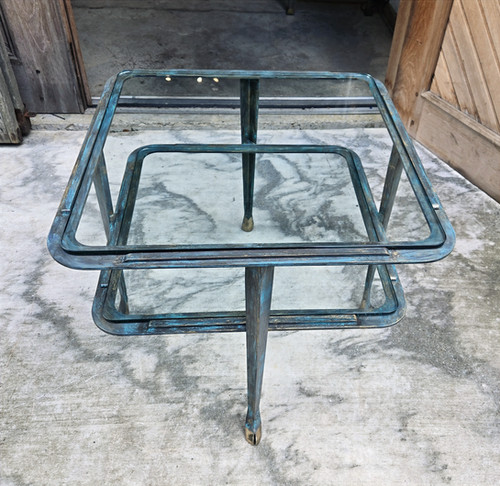


Each design balances tribute and innovation, using natural materials and sculptural realism to evoke the spirit of pied-de-biche without overwhelming the form.
A Legacy of Design
By modernizing the deer-foot motif, Joseph Stannard Design® has carved a niche that honors the past while embracing the future. His work reminds us that great design is timeless. Even the smallest details, like the curve of a hoof, can carry centuries of meaning. Through bronze and brass, tradition and innovation, Stannard has created a legacy that stands, quite literally, on the feet of history.
Conclusion
In summary, the deer-foot style is more than just a design choice. It represents a rich history of craftsmanship and artistry. Joseph Stannard’s reinterpretation of this classic style showcases how traditional elements can blend seamlessly into modern design. This approach not only preserves the past but also creates a dialogue between eras. The Deer-Foot Coffee Table exemplifies this connection, making it a remarkable addition to any curated collection.
References
Glossary
Pied‑de‑biche
French, “doe’s foot”
A furniture foot form characterized by a gently tapered leg terminating in a stylized hoof. The pied‑de‑biche appears in late 17th‑ and early 18th‑century French design and is closely associated with the Régence and early Louis XV periods. Its profile is more refined than the heavier English hoof foot, emphasizing lift, elegance, and an animalistic grace that complements the curving lines of the era’s cabinetry and seating.
Often found on consoles, tables, and fauteuils, the pied‑de‑biche reflects the period’s fascination with natural forms and the fluid transition from Baroque mass to Rococo movement.